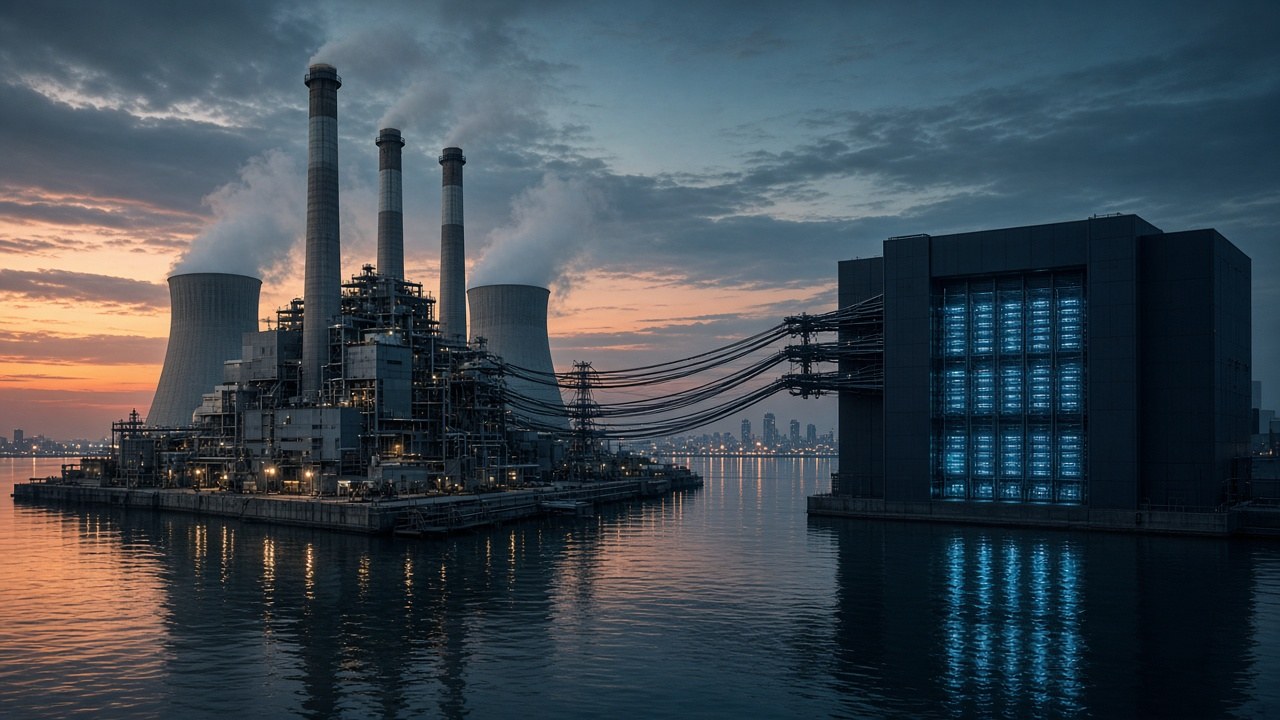
JERA, Japan’s largest power generator, is in talks with Anthropic, Meta and other US tech giants to build data centers right next to its power plants around Tokyo, Nikkei Asia reported early on Friday. JERA Global CEO and Chair Yukio Kani told the paper that the company is also in discussions with Amazon, Microsoft and Google.
The idea is a “behind the meter” setup. Instead of drawing electricity through the public grid, the data centers would take power directly from the plant next door. That lets a builder skip one of the slowest parts of any AI data center project: waiting for new transmission capacity.
No deal has been signed. According to Reuters, via CNA, Anthropic, Meta, Amazon, Microsoft and Google did not immediately respond to requests for comment. The reports give no investment amount, capacity, site list or timeline.
Building on the Chiba project
The talks follow a plan JERA announced in October with Dell Technologies and UK-based AI infrastructure developer RHAELM. The three signed a memorandum of understanding to develop a standard model for building AI infrastructure across Japan. It starts with a $15 billion hyperscale data center next to JERA’s thermal power station in Chiba, near Tokyo.
A JERA spokesperson told Reuters that RHAELM handles marketing for the project and that JERA had been told RHAELM is in talks with multiple hyperscalers. RHAELM was not immediately available for comment.
Why power is the new bottleneck
For AI labs, electricity now matters almost as much as chips. Training and running large models needs huge amounts of steady power, and grid connections in big cities can take years. A site beside an existing power plant offers a shortcut, and it can also ease local pushback against new data centers in crowded suburbs.
For Anthropic, which went public on Nasdaq this month, the talks point to a growing need for capacity in Asia as it scales. Meta and the big cloud providers are already pouring record sums into data centers worldwide.
The Next Unicorn take
The AI race is turning utilities into landlords. JERA owns something no startup or cloud giant can build quickly: plants already plugged into power and land. If even one of these talks becomes a contract, expect other Asian power companies to pitch the same model. For startups, the openings are in the layers around these sites, such as cooling, energy management and the software that matches compute demand to power supply. Until a deal is signed, though, this is a pitch, not a project.