

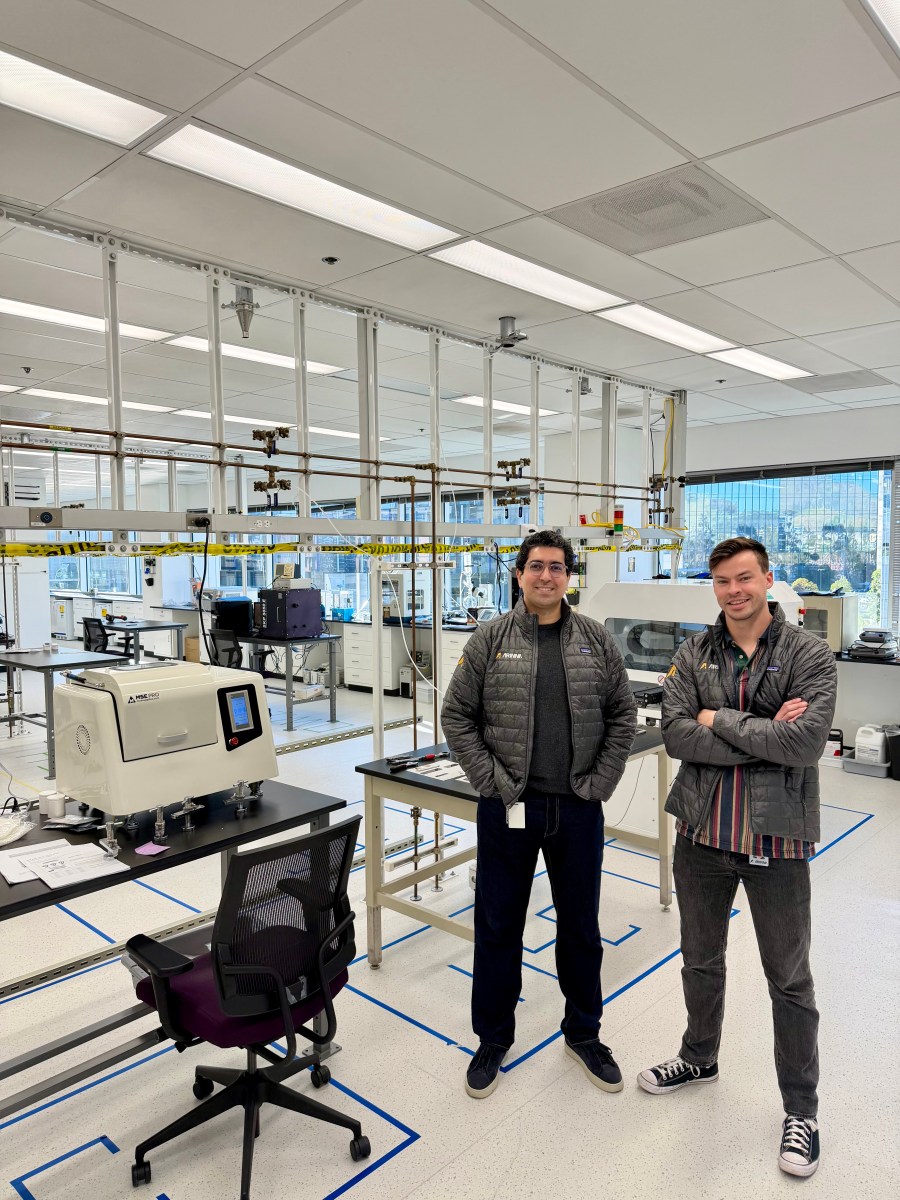
Arinna is a groundbreaking startup co-founded by two Stanford PhDs—Koosha Nazif and Alex Shearer. They’ve already raised a very impressive $4 million in seed funding to create solar cells uniquely designed for spacecraft. The firm derives its name from the Hittite god of the sun, and it’s pronounced like “arena.” Above all, it intends to solve the toughest power problems that the space sector encounters.
Based on groundbreaking technology that is based on transition metal dichalcogenides (TMDs), Arinna’s solar panels have the potential to be a true game-changer. TMDs are atomically thin semiconductors that have only been developed in recent decades, allowing for unprecedented efficiency in photovoltaic applications. Compared to traditional designs, Arinna’s solar panels will increase efficiency by 32%. They get rid of protective shield, radically simplifying spacecraft design.
Nazif (right) and Shearer (left) first crossed paths at Stanford while pursuing their own doctoral research. Together, they crafted groundbreaking solutions to a vexing problem that had long plagued deep-space exploration. Working together, their unique collaboration has spurred important innovations in the development of solar technology robust enough to handle the extreme temperatures and radiation found in orbit.
Arinna’s solar panels are built for durability, with an estimated operational life of 15 years from deployment in space. They can be manufactured and delivered within weeks, allowing for rapid deployment in response to the evolving needs of space missions. The New Zealand-based company expects to have its first products in orbit testing before the end of 2026.
In an announcement about the startup’s vision, Shearer emphasized their complementary roles with this description of their partnership within the company,
“Koosha was very much the architect, and I am construction.”
The seed funding raised will accelerate Arinna’s mission to build a facility. Through this facility, they’ll be able to produce ultrathin solar panels at megawatt-scale mass production by 2028. This facility will prove Arinna’s leadership, not only in the field, but to the growing market for space power. It will open doors to sustainable, more efficient energy solutions for future missions to space.
That’s why industry experts know how groundbreaking Arinna’s approach is. USEED climate change strategist Wiz Khuzai commented on the persistent injustices in the sector, adding,
“What I’ve seen from all of the space companies we’ve invested in is that power is a barrier, a bottleneck.”
Arinna is excited to be moving full steam into its next workshop phase. The firm hopes to change the way we collect solar energy in outer space, solving one of the most important problems in aerospace engineering.
“A lot of solar development over the years are eking out slight percentage improvements on well-known and existing technology. This is a totally different class of materials.”
As Arinna prepares for its next phase of development, it aims to redefine how solar energy is harnessed in space, tackling one of the most pressing issues in aerospace engineering.




Leave a Reply