

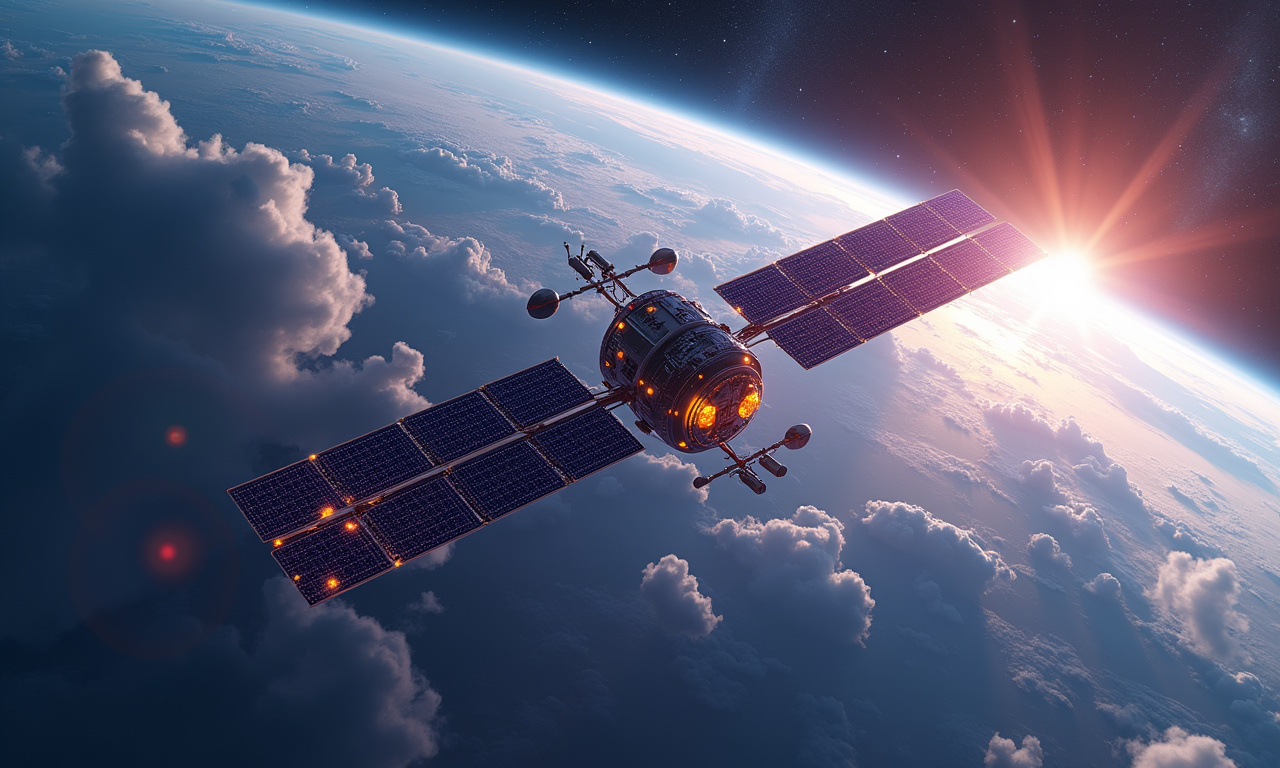
K2, a burgeoning space technology company, has announced plans to launch a total of 11 satellites over the next two years. Whether it’s a demonstration debut or a commercial effort, each of these missions will serve to plant our flag in the ground in an increasingly competitive space market. In a statement, the company’s CEO, Karan Kunjur, emphasized their commitment to advancing new technologies. He announced ambitious plans for in orbit data centers, which will massively increase the processing and computing capabilities in space.
In order to fund these ambitious plans, K2 has successfully raised $450 million to date, a clear testament to profound investor confidence in K2’s vision. Fast forward to December 2025, and the instant delivery company had rocketed to an astounding $3 billion valuation. This success underscores its growing clout across the aerospace and associated sectors. To support HEO missions, K2 has developed a robust 100 kW satellite. With this innovation, the company inserts itself on the competitive forefront of high-powered satellite technology.
What makes K2’s spacecraft unique is their ability to generate power though the exact numbers are not publicly available. The company argues that their satellites offer a more economical approach than the high-powered models offered by legacy contractors. The Gravitas model comes in at a tidy $15 million. Kunjur noted that it could cost around $7.2 million per spacecraft to launch these. He argued that this investment is more than matched by future returns on their state-of-the-art technology.
The firm’s upcoming demo missions will be judged on multiple levels of success. Overall mission success will be defined as having the spacecraft successfully unfurled and providing power as expected. K2’s overall strategy is to prove and build a thick infrastructure of federally supported commercial networks of high-powered space vehicles before 2028.
K2 is committed to a long-term, progressive vision. This strategy exemplifies their desire to get ahead of competitors and capture emerging new opportunities in the aerospace sector.
“The thinking is, let’s build all the components that we’re going to need to be a first mover when Starship and New Glenn are available for everybody else.” – Karan Kunjur
K2 has developed and manufactured nearly 85% of its systems in-house. This commitment is a clear reflection of the company’s interest in furthering vertical integration and quality control. This sizable in-house capacity not only allows K2 to be less dependent on outside suppliers, it improves K2’s ability to innovate quickly.
K2 has big plans going forward. They coincide with a larger push in the aerospace industry toward high-powered satellite capabilities to keep pace with ever-increasing data processing and communications demands in space. With K2, we’re going out with one of the highest-powered spacecraft ever built. That extraordinary record has now become the new frontier of satellite technology.
As the company explores and develops these ambitious projects, the world will be watching for what it can do to shape the future of space computing. The outcome of these launches will be crucial in shaping K2’s path forward in an ever-competitive market.
As the company embarks on these ambitious projects, it remains poised to influence the future of space computing significantly. The success of these initial launches will be critical in determining K2’s trajectory in an increasingly competitive market.






Leave a Reply